
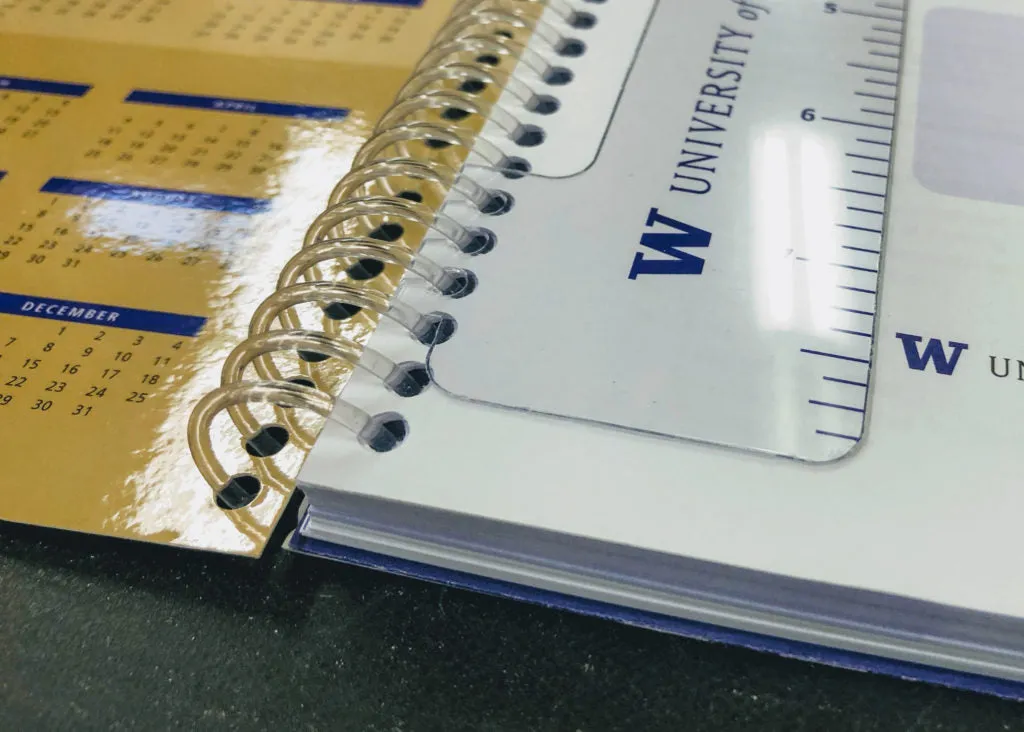
What Is Wire-O Binding?
Wire-O binding uses a double-loop wire element that threads through punched holes along the binding edge of a document. The wire is crimped closed to hold the pages securely. Unlike perfect binding or saddle stitching, Wire-O allows pages to turn a full 360 degrees and lay completely flat — making it the preferred method for documents that see heavy, hands-free use.
Wire-O is sometimes called double-loop wire binding or twin-loop binding. It should not be confused with plastic spiral (coil) binding, which uses a single continuous coil rather than individual wire loops.
Best For
Wire-O binding is the right choice when your document needs to open flat, withstand repeated use, or include specialty components:
- Training manuals and technical documentation
- Cookbooks and recipe collections
- Calendars and planners
- Reference guides and field manuals
- Presentations and pitch books
- Tabbed directories and parts catalogs
Wire-O accepts pages in increments of two (one sheet), so you are not locked into multiples of four like saddle stitching.
Wire Options
- Wire sizing
- Based on book thickness + 3/16 in. clearance
- Back gate (1/4–9/16 in. wire)
- 1/4 in.
- Back gate (5/8–1 in. wire)
- 3/8 in.
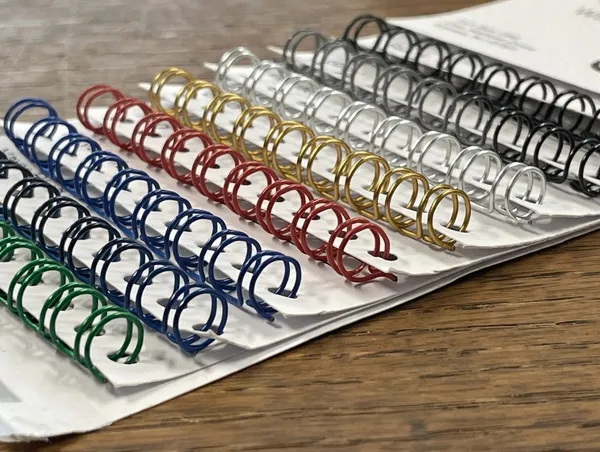
- Wire colors
- Black, white, silver, blue, red, gold, and more
- Wire material
- Metal double-loop (twin-loop)
Specifications & Capabilities
- Page increment
- 2 pages (one sheet) No multiple-of-four requirement
- Binding margin (gutter)
- 3/8–7/8 in. Depends on wire size and project thickness
- Safe zone from bound edge
- 10 mm (0.4 in.) minimum
- Bleed
- 1/8 in. on all four sides
- Cover options
- Laminated paper, rigid card, plastic film, PVC, vinyl
- Specialty components
- Tab dividers, inserts, fold-outs, die-cut pages
For detailed file preparation guidelines including punch margins and back gate clearance, see our Wire-O binding requirements.
Wire-O vs. Spiral Binding
Buyers often confuse Wire-O with plastic spiral (coil) binding. The key differences:
- Wire-O uses individual double-loop metal wire segments crimped through rectangular punch holes. It produces a clean, professional spine and holds its shape over time.
- Spiral binding uses a single continuous plastic coil threaded through round holes. It is more flexible but can look less polished and may deform with heavy use.
Both methods allow lay-flat opening. Wire-O is generally preferred for commercial and corporate work where appearance and durability matter.
Why Puget Bindery
- Short and long runs: Our Wire-O equipment handles everything from small presentation batches to high-volume production.
- 100+ years of expertise: Three generations of bindery knowledge since 1919.
- Specialty components: We collate and bind tab dividers, inserts, fold-outs, and die-cut pages in-house.
- Pacific Northwest service: Based in Kent, WA, serving printers and publishers throughout Washington, Oregon, and the greater Pacific Northwest.
Need a different binding method? See our perfect binding or saddle stitching services. Building a hanging calendar? Read our Wire-O hanger notch layout guide. Not sure which method is right? Read our binding method comparison guide.
Frequently Asked Questions
- What is the maximum page count for Wire-O?
- There is no fixed maximum page count. Wire size is determined by book thickness — we size the wire to your finished text block plus 3/16 inch clearance so pages turn freely. For very thick books, contact us to confirm wire availability and binding feasibility.
- Can Wire-O books lay completely flat?
- Yes. Wire-O binding allows books to open fully to 360 degrees and lay completely flat on a surface. This makes it ideal for cookbooks, training manuals, reference guides, and any document that needs to stay open hands-free.